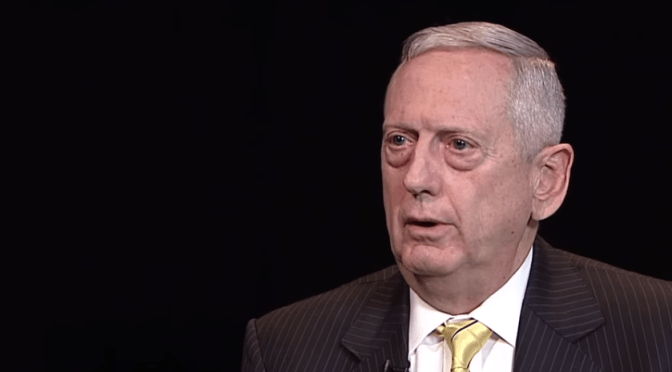
Ran across this today, which eloquently captures an important concept that I was wondering how to convey myself. I think I’ll use this in the book somewhere. Its from a 2015 interview with General James Mattis, before he became Secretary of Defense. He’s being interviewed by Peter Robinson, on the show ‘Uncommon Knowledge”. It’s a wide-ranging discussion, but this part comes in right at the end.
Here’s my (slightly edited) excerpt of the General’s remarks:
I would just say there is one misperception of our veterans and that is they are somehow damaged goods. I don’t buy it. There is also something called post traumatic growth.
For those who close on the enemy, who seek out, close with to kill the enemy, it is a very atavistic, primitive environment and there is post-traumatic stress for anyone who’s been through it. There is stress, no doubt about it. It’s not an insignificant moment the first time you draw down and you shoot your fellow man, that’s all there is to it. Or you see your buddy get hit next to you. So, the bottom line, there’s going to be stress.
But it does not have to be post traumatic “disorder” or “syndrome”. You don’t have to come at it from a position of illness. You can come at it from a position of wellness, from a position of growth as a human being. I’ve seen people come out of this sort of thing better. Better men, better husbands, better fathers, more in touch with their God or whatever their source of spiritual strength is, kinder, more compassionate.
Not everyone reacts the same way, but I don’t buy that somehow if you came home from Iwo Jima or Gettysburg or Iraq or Afghanistan, that somehow you’re limited in what you can do. The Greatest Generation came home from WWII, the worst war in world history and they created good communities, they rose to be college presidents, started industries… I just don’t buy that somehow we are handicapped because we’ve been in those circumstances. I recognize the grim realities. I don’t recognize the limited potential of a human being when they come out of that. –Gen James Mattis, USMC (retired)
Here’s the YouTube, starting with this discussion:
This is an outstanding reference, that is hard to find. I’ve told several people about it, and some have asked me to send it. Now I can just send a link and people can download for themselves.
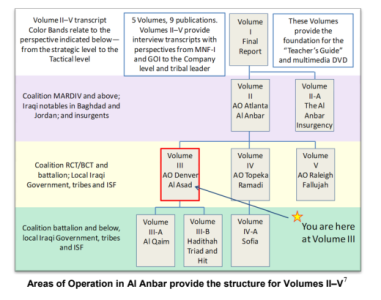
The Institute of Defense Analysis (IDA) published a detailed, multi-year, multi-volume study on the campaign for Anbar and the Awakening. It is an outstanding resource. The graphic shows all the different volumes of this quite impressive project, several of which you can access on IDA’s website.
The volume on Al-Qaim, however, is not available online (at least I couldn’t find it), so I had to request it direct from IDA and they emailed it to me. To make it easier for others, here it is: Awakening Vol IIIA-AlQaim
It covers the Al-Qaim area, over multiple years and units, including 3/2 in 2005. There are multiple interesting interviews with key players. But from my perspective, the most important are long interviews with LtCol Mundy, 3/2’s Commander (page A-3), and Capt Diorio, Commander of India Co (page A-39). The full transcripts are in Vol III-A.
There appears to be a DVD, with all volumes and videos, that you can order. This is a short preview of the project, that IDA posted on YouTube.
(This post was incorporated into the book’s Preface)
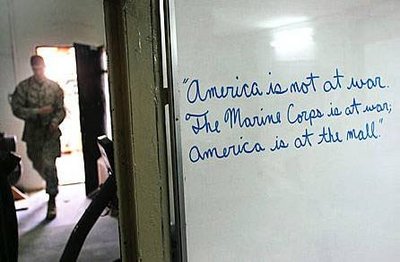
A couple weeks ago, I wrote about a photo and a saying that came out of the bitter fighting in Ramadi in 2006 & 2007, “America is not at war… America is at the mall“. I also put up a link on Facebook, and was surprised when quite a few people responded to that. Apparently, it struck a nerve or two, so this is a follow-on post, a “part 2”. Both will form parts of the book’s Preface, which I’ve been composing piece-by-piece in the last week or so. You can see that work-in-progress here. Anyway, here’s the part 2:
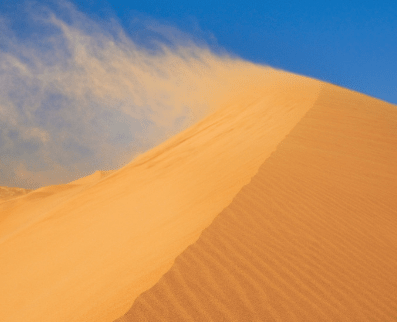
For all intents and purposes, the accomplishments of the 3/2 Battalion during their 2005 deployment — and the entire Iraq War for that matter — have already been forgotten. They’ve been covered by windblown dunes, successive layers of blithe forgetfulness that settled over a nation eager to move on. Which is a tragedy all its own.
The tandem successes of the tribal Awakening and the Bush/Petraeus surge, which were built on foundations laid by 3/2 Marines as described in this book, led to what can only be termed victory in Iraq.
Paradoxically, however, success only accelerated America’s collective amnesia. By 2009, Marines in the city of Husaybah were drinking chai with locals along Market Street, without body armor, an amazing thing to those who had shoot-outs there in 2005. Meanwhile, news at home was dominated that year by Michael Jackson’s funeral, the latest iPhone release and Obamacare. Still more cognizance was soon buried as the new administration executed a precipitous, ill-advised withdrawal from Iraq, completed by 2011. Afghanistan was Obama’s “good war”. Iraq was Bush’s bad war, the stepchild rejected by both left and right.
Then, in 2014, came a layer of hot volcanic ash blasting out of the desert and across the entire landscape as the black shroud of ISIS descended. For veterans who had served in Iraq, especially those who’d been part of the campaigns to pacify Anbar, it was painful to watch enemies they’d once vanquished reconquer large swathes of the country. Each city that fell to the raving killers brought memories of sacrifices made, of friends lost, of blood spilt, all now seemingly in vain. My own reaction was to psychologically turn away. To put it behind me. I didn’t know how to face what I felt was a massive betrayal that was unfolding as ditches filled with corpses and roads were lined with severed heads. Other veterans I’ve spoken with had similar feelings. It was hard to fathom how America could let the progress we’d made, and yes, the victories we’d won, slip away.
And so multiple strata of forgetfulness settled over Anbar, over Al-Qaim (one of the first areas in Iraq to fall under ISIS rule), and over the battlegrounds where US Marines fought just a few years before. In a way, then, my task has been that of a “temporal archeologist”, carefully brushing back layers of sediment to reveal the truth below. Reaching back now, nearly a decade and a half later, is to uncover what is essentially ancient history in today’s Twitter-fueled hyperworld.
We held a meeting and agreed to fight those who call themselves mujahadeen. We believe that there is a conspiracy against our Iraqi people. Those terrorists claimed that they are fighters working on liberating Iraq, but they turned out to be killers. Now all the people are fed up and have turned against them — Sheikh Abdul Sattar Abu Risha in a Sep 06 New York Times interview.
24 Infantry Battalions in the Marine Corps Heritage Foundation; Assessment of U.S. Military Power, 2018
The Marine Corps’ basic combat unit is the infantry battalion. A battalion has about 900 Marines and includes three rifle companies, a weapons company, and a headquarters and service company. FY 2017 appropriations supported 24 infantry battalions, an increase from 2016 levels but still down from 27 in FY 2012. Although the President’s FY 2018 budget request retains support for 24 battalions, under full sequestration, USMC end strength would be able to support only 21 infantry battalions, which, according to General Dunford, would leave the Corps “with fewer active duty battalions and squadrons than would be required for a single major contingency.”
(This post was incorporated into the book’s Preface)
As he navigated through the cramped hallways of the battle-scarred Government Center in Ramadi, Iraq, award-winning photographer John Moore tried to stay out of the way as gruff U.S. Marines hustled from one room to another. For many months, the Government Center had been ground zero in the fight to win back control of the most important city in Anbar Province. Moore lifted his camera as his practiced eye glimpsed a handwritten note on a whiteboard. There, in a careful, cursive script (rare in military settings) some anonymous bard-in-cammo had written:
America is not at war. The Marine Corps is at war; America is at the mall.
The photo was taken in January 2007. It was published in U.S. newspapers, then circulated around the blogosphere for a few weeks, but faded quickly from America’s collective consciousness — ironically proving the nameless author’s point. No doubt it was quickly erased from the whiteboard as well, as such cutting cynicism is not the message the Marine Corps wants to project to the public.
But for those who had fought bloody battles to secure Ramadi in late 2006, known then as the Sunni insurgency’s “heart of darkness”, the cynic’s lines perfectly captured their mood. It was a hard-edged sentiment, with equal parts disgust and pride. Pride at what they’d endured and accomplished. Disgust and disillusionment that it was so casually disregarded, even actively devalued, by most of their countrymen at home.
Today, that same bitter mixture still circulates in the veins, synapses and buried memories of those who served in the wars in Iraq and Afghanistan. Take the time to really talk to an Iraq War veteran about his or her experiences there, and you will likely hear some version of “America is at the mall”.
(I’ve moved the rest of the Preface to its own page)
Posted as a reference, supporting one of the chapters in the book
Quote from a footnote in, Marine Forces Reserve Operational History: Global War on Terror (2004 – 2007) by Col David T. Waters, USMCR The turnover of Coalition staffs was significant. II Marine Expeditionary Force Forward (II MEF (Fwd)), 2nd Marine Division, and three regimental combat team staffs relieved their I MEF counterparts, many of whom had been in Iraq for more than a year. Subordinate units, including battalions and squadrons, also turned over as part of the scheduled seven-month deployment cycle.
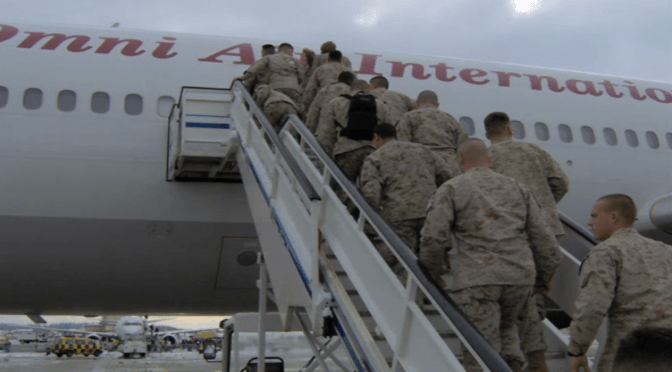
AL ASAD AIR BASE, Iraq — Each night for a month, helicopters or sometimes cargo planes have brought them–Marines, jarred and jet-lagged from the two days of travel that took them from the U.S. through Germany and Kuwait.
The trip always ends the same, in Iraq’s western desert, on hard plywood benches under piercing fluorescent lights in a warehouse, facing the square jaw of Cpl. Lynn Caskey of Omaha and the simple greeting he has delivered to thousands of Marines in recent weeks:
“Welcome to Al Asad. Welcome to Iraq.”
And like that, the contest for Anbar, one of Iraq’s most restive provinces, is handed to a new crop of Marines, joining a two-year war now on its third rotation of American troops… full article
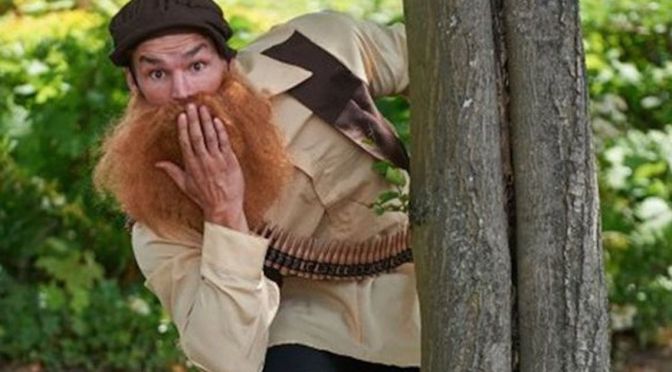
Funny story. So, a few months ago, I’m scanning around on Facebook, trying to connect with various 3/2 veterans. Sending out friendship requests, sending chat messages. Gotta admit, I’m still a noob on FB, so sometimes I fumble around a bit. Anyway, as I start chatting with one guy, he starts getting squirrelly with me, really suspicious. He’s asking, how do I know who you say you are? And as I try to answer this (kinda hard if you think about it), suddenly a strange message pops up on my ‘timeline’. It says:
NICE TRY ISIS!!!
I’m baffled at first. It didn’t come from the guy I’m chatting with, but some other dude I’ve never heard of. I keep chatting (by now I’m in about 3 simultaneous chat sessions w different guys), and it slowly dawns on my that they’ve been chatting with each other, checking me out. One of their buddies was apparently getting hammered at a bar somewhere, and fired off that message from his cell phone.
Then the original guy kind of explains whats going on, and why they’re suspicious. We end up having about a 45-minute phone call that night, and I answer a bunch of his questions. He’s kind of ‘extreme vetting’ me. And I get it, there’s lots of weirdos and kooks on the interwebs, so I don’t mind. We actually had a pretty good talk, and he wants me to talk w another of his buddies. So next day I pretty much go through the ringer again with another guy.
Oh, and in the meantime, I erased the drunk guy’s post from my timeline… That didn’t seem like a good thing to leave up there…
Lessons learned:
I need to be a bit more careful when I contact someone out of the blue, especially on Facebook. It’s kind of hard not to sound sketchy through a little chat window. I’ve actually scaled back on my Facebook ‘outreach’ efforts.
I need to be prepared to answer some probing questions from these vets. I can’t blame them, really. I might be leery if someone I’d never heard of texted me late at night, asking about my deployments.
Never under-estimate the speed and reach of social media. Literally within minutes, I had introduced myself to one guy, started chatting with several others in his unit, then got denounced as a terrorist. All between commercials.
But there’s also a lesson for you other 3/2 guys:
I backed off my efforts to contact that unit for quite a while. At the same time, other sources were being very open, sharing great info. For the next few months, I pushed my efforts in their direction, and then switched to yet another unit. I’m kind of fluid that way, I’ll follow the leads and sources that present themselves.
I still want to get back in contact with those guys that were ‘extreme vetting’ me that night, because they’ve got an important part of 3/2’s story. And I think that’ll happen soon. But, my telling their story will depend on the confidence they choose to place in me and their cooperation.
Anyway, gotta run. Time for morning prayers at the mosque… (that’s a joke, btw)
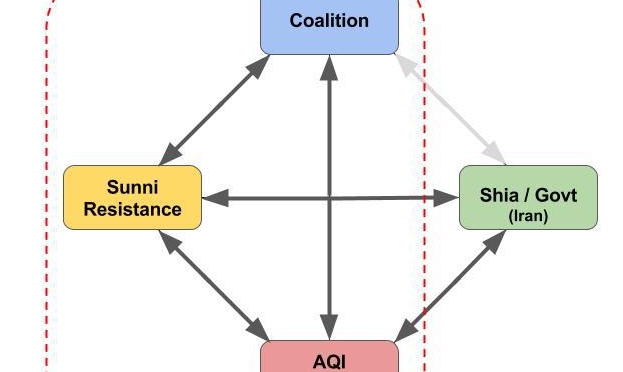
The red dotted line shows the operative dynamics in Anbar Province in 2005. Gray arrow depicts the latent conflict between the Coalition and Iranian-sponsored Shiite militia groups.
I’m changing the title again, cause ‘6-Way War’ sounds a little catchier, kind of like the famous ‘6-Day-War’… Don’t know, may change it again…
Anyway, this is a section I’ve been mulling over in my mind for some time, and its time to put it together. I think this is a good way to encapsulate the multifaceted, diabolically confusing Iraq War. To boil it down, there were four major ‘factions’, each struggling against the other three.
Hopefully this nifty graphic makes some sense. While there are four ‘sides’, there are actually 6 separate ‘axes’ of conflict:
Coalition vs. Sunni ‘resistance’
Coalition vs. AQI / Jihadists
Sunni ‘resistance vs. AQI/Jihadists
AQI vs. Shia / government / Iran
Sunni ‘resistance’ vs. Iranian/Shiite government
Coalition vs. Iranian Influence
And yes, I left out the Kurds and the Turkomen, to keep it under control…
Here’s the way I think I’ll approach this, in outline form:
The Marine Corps “strategic corporal” and “three-block-war” ideas. Background and explanation. New demands on small unit leaders and individual Marines.
Explain the 6-Way War concept and graphic.
Coalition vs. Sunni resistance – upon arrival in Al-Qaim this was the main conflict for 3/2. Security and Stability Ops. Conventional force vs. insurgents. As deployment progressed, this began to morph.
Coalition vs. AQI/Jihadists – The main Coalition command responsible for this fight was the JSOC Task Force 714, General McChrystal’s outfit. It was a parallel, but separate war in many respects, with Delta, SEAL Teams, and Rangers hunting for high-value targets (HVTs) across Anbar, including in 3/2’s battlespace. But as 3/2 got on the ground, it also started engaging AQI as its main enemy. And as local insurgents turned against AQI, 3/2 (especially India Co.) became enmeshed in this dimension of the war.
Sunni resistance vs. AQI – Also known as ‘red on red’. This was a major theme during 2005 in Al-Qaim. Local insurgents (Albu Mahal tribesmen, then others) rejecting AQI’s tyrannical, terroristic rule. And ultimately calling on 3/2 Marines for help, which was the first part of the Sunni ‘Awakening’ process that changed Anbar so dramatically the following year.
AQI vs. Shiites, the Shiite led government and Iranian influence. – Zarqawi and his followers had a visceral hatred towards the Shia, and targeted them mercilessly. Since there aren’t many Shiites in Anbar, this wasn’t a prominent dynamic in 3/2’s AO, but it played out through AQI’s use of western Anbar and the ratlines to funnel suicide bombers and other so-called “accelerants” east into Bagdhad and areas where the Shia lived and worshipped.
Sunni resistance vs. Shiite & Iranian influence – This was also a secondary factor in 3/2’s AO, but did play a role. Some 3/2 Marines saw the ugliness of this sectarian hatred in various ways. Chris Ieva’s walk through the angry Sunni crowd, along with Shiite Shawani SOF guys, is a dramatic example.
Coalition vs. Iranian influence. – Didn’t really figure directly into 3/2’s fight in 2005, as there were no Shiite militias in Anbar. This wouldn’t become a big factor until after AQI’s bombing of the Samarra Mosque in early 2006, when JAM and Shiite death squads would become another enemy the Coalition would have to fight.
Here’s an excellent video showing a firefight at “Trash OP”, situated on the north side of Husaybah and manned by India Company. After you view it, see my amplifying comments below (***language warning***)
I don’t know the names of these Marines, yet. Hopefully I’ll have that info soon…
There’s a few things to note here. First, this wasn’t random firing at all. They’d just been shot at by insurgents, and returned fire.
Second, the sheer exuberance of the Marines was typical. Most grunts in India Co. actually looked forward to a rotation at Trash OP, because it was likely they’d get into a firefight. This is hard for many to understand, but it’s indicative of the aggressive attitude among Marines in combat.
Third, even though it may seem like the firing starts to get out of control, and the Squad Leader struggles for a few seconds to get his Marines to cease fire, that is very common in combat. The noise of modern firearms can easily drown out verbal orders. Actually, he quickly gets the firing under control, gets on the radio to coordinate further actions, and the squad gets water to cool the MG barrels down, prepping for the next engagement. Even though there’s some hootin’ and hollerin’, their actions are efficient and professional.
Finally, notice that somebody suggests they leave the expended brass where it lies, to impress the next squad with the firefight’s intensity. But the Squad Leader says, no, “We’ll police it all up. We have to, we live here!” Another sign of professionalism and discipline.
This is a great video of a nighttime AT-4 launch from the Trash OP into Husaybah, responding in kind to insurgents launching RPGs at the outpost. I’ve researched this, and am quite sure this happened on the night of 25 June 2005. Will Marconi has confirmed it was he and his guys, 1st Squad, 1st Plt, India Co, that fired it.
In the background you’ll hear Will yell “Beautiful!” after the explosion. (***language warning***). Then below, read his first-hand description of the whole incident and the aftermath…
As background, there had been a lot of action that day, with insurgents in the city engaging Trash OP from various buildings. The firefights intensified that night, involving three different elements; Marconi’s squad in their heavily sandbagged position, 2nd Platoon posted at the ING compound, and a Scout/Sniper team operating from a hide site within the city. For some reason, that night the insurgents had decided to test the Marine positions with more than the usual pot shots. Gunfire echoed from multiple engagements, while tracers crisscrossed over the northern part of the city. An RPG round suddenly streaked towards the OP, exploding short of 2nd Squad’s position. Then another exploded behind them.
Will Marconi, then a Corporal and Squad Leader, recalls:
It was my squad at the OP that night. Ronnie Jackson actually saw the RPG launch when it happened, so knew exactly where it came from. It landed about 100 meters short of us. A few minutes later, another RPG hit behind us, like they were bracketing us. I was getting concerned for our safety.
We kept two AT-4 rockets out there, to counter possible VBIED attacks, but I decided we needed to use one of them to respond. Our MGs and M-16s just weren’t having good effects. Normally we’d have to get permission for an AT-4 launch, but I couldn’t get on the radio. 2nd Platoon was also engaged, and the radio was clogged with traffic.
I’m sure it was LCpl Hartsock that fired the AT-4. He was given an award for it later. He was the only one in squad who had fired a live AT-4 in training. I gave Jackson my tracer mag and had him mark the target, while I had everyone else cease fire. Then Hartsock had to get outside the sandbags, exposed to incoming, since he couldn’t fire it inside the OP because of backblast danger. When he stood up, I ordered everyone to cover for him, lay down suppressive fire.
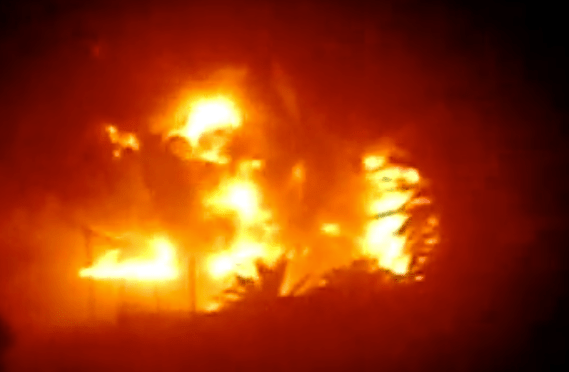
When the AT-4 hit the house, it blew and then flames shot way up. I was astonished at how big the explosion was. It was pretty wild. At the time, we thought we’d hit an arms cache or something the way it went up like that. It wasn’t the normal effect an AT-4 would have. Something in that house exploded, and there were flames everywhere. It seemed like the whole street caught on fire. The flames were lighting everything up, and you could see guys running around.
The flames illuminated the insurgents and made them vulnerable. They were in a crossfire from us, the ING and from the snipers. Some were running away, but some were running forward to fire at us. I remember talking to a Reaper guy years later, and he said they shot one guy who was moving forward with a backpack full of RPG rounds.
So the fire made it hard for the insurgents to move around. That AT-4 turned the tide that night, and there wasn’t much firing at us after that. We were supposed to be relieved that night by another squad, but all the firing delayed that. A couple hours after the AT-4, we did get relieved and went back to Gannon.
As soon as I got back, I was told Capt Diorio wanted to have an AAR with us so my PL, Lt Brummond, and I went over to the COC. The LT was worried because I hadn’t coordinated the shot over the radio. We were supposed to get permission. But the radio had been jammed, so I couldn’t get a call through. I used my own judgement.
When we got into the COC, the Captain says, “Marconi, what do you have against Dunkin’ Donuts?” That’s when we found out it was a bakery. Locals were already calling in complaints because it was destroyed. Other shop owners had their shops burning too, so it was a big deal.
But we knew the RPGs had come from there. No doubt. And us shooting that AT-4 pretty much ended the fight. I thought maybe I was in trouble, but I just explained what happened. I still remember Capt. Diorio’s response. He told me, “Corporal Marconi, I want you to know I will not judge you for decisions on the battlefield. However, I need to know what happens on the battlefield, to adjust our tactics. So relax, you’re not in trouble. You did the right thing.”
1st Sgt Donnie Brazeal was cool about it too. There were still flames burning on the skyline in north Husaybah, and Brazeal said, kind of joking, “Ain’t that the purtiest thing you’ve ever seen?”. That’s the way he was, 1st Sgt Brazeal was always about supporting his Marines, and bringing everyone home. That’s the night I realized my leaders had my back, and that India Co. was a special outfit.
–Will Marconi, interview with author (used with permission)
3rd Battalion, 2nd Marines and the fight for Al-Qaim, Iraq
 This is an outstanding reference, that is hard to find. I’ve told several people about it, and some have asked me to send it. Now I can just send a link and people can download for themselves.




 Bastards & Brothers