The 8th of May is a hard day for the families of three Marines who lost their lives during Operation Matador, in New Ubaydi, in 2005. It was the first day of the operation and a Sunday. And that Sunday was Mother’s Day.
It was also a hard day for many of the Marines who were there that day, fighting alongside their brothers in strange and dangerous place. Some of them still struggle with their memories of that day.
LCpl Lawrence (Larry) Philippon, from Kilo Company, 2nd Plt, was killed during house-to-house fighting as Kilo Company cleared New Ubaydi. He was an exemplary Marine, a leader in his platoon, who had pushed to get combat duty.
According to an article in his hometown newspaper, Larry was a star athlete in high school, then went to Central Connecticut University for a time. But in 2003 “He came home one day and said he was going to join the Marines.” He was selected for the Marine color guard, and served with distinction there, but persistently requested duty with a front-line infantry unit. He told his parents, “I didn’t sign up to be a pretty boy”.
I know this is a tough time for the Philippon family, and my heart goes out to them. I’ve had some initial contact with them, and will soon be writing more about that day and Operation Matador overall. It is a daunting task that I do not take lightly.
Two other Marines also lost their lives that day, from the 3/25, a Marine Reserve unit from Ohio. SSgt Anthony Goodwin, on his third deployment to Iraq, and one of the key NCOs in his unit. This is an excellent video tribute about him.
Cpl Dustin Derga, was a firefighter back home and another young man who pursued a calling he felt to be a Marine, through the reserves. Here’s a touching tribute, written by his father.
Several Marines have reached me tonight with more info about their time at the outpost known as Retrans (it was set up as a radio retransmission station). See more here. I’m working on a short chapter about it, and asked for stories, memories and photos, and they started rolling in. Thanks guys!
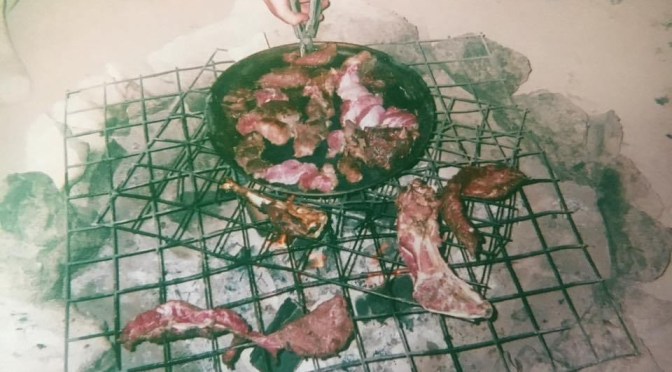
David Pape sent me the story of the great 4th of July sheep BBQ, and its posted here [slightly edited] with his permission:
I can pretty much guarantee that there was not a single marine in 3/2 who spent more time at Retrans then I did. 81’s [mortar crews] would’ve been the closest but even they got relieved more then I did… It sucked up there man! But we dropped hundreds of rounds from there, ran illum [illumination] missions for sniper attachments. And had serious Spades tournaments to kill time! It was the MRE diet, sleeping in bunkers, and the heat! But that is also where I’ve seen the most beautiful sunsets and stars I have ever seen!!
And [then there are the] stories about the sheep I cleaned and cooked. One the first tour [at Retrans] and the second on the Fourth of July!! The first trip out there I was eating an MRE at daylight and I look up and across the wadi there is a lone sheep. I asked SSgt Jeremy Martinez to let me shoot it and he wouldn’t let me. So a sniper shot it, and me and Gayle drug it over and cleaned it. Then we cooked it on the bone.
Sheep on the Barbie…
The week of the 4th I told everybody watch for the sheep herders and if they come let me know. On the 3rd two kids had a herd down by the bridge. So 6 or 8 of us kicked out a little patrol. A guy went high and set up overwatch with a SAW a few hundred back. We get down there and trade 20 American dollars and a case of MREs for two sheep. One didn’t want to leave the herd, so Montoya dropped it. We finally got back and put the live one in the M-240 bunker overnight. It shit everywhere!!
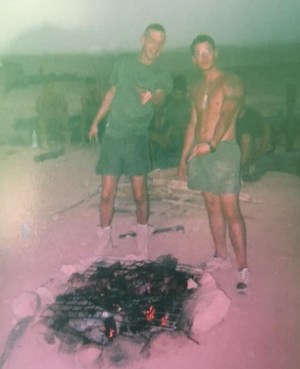
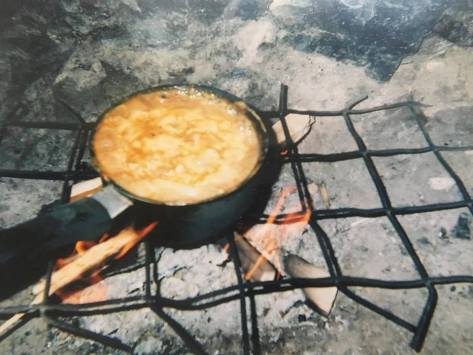
Next day we killed it. I showed John Parina how to gut it. Hung it on the front of a 7-ton [truck] on the spreader bar used for towing, skinned it out and quartered it. They had a pan in the .50 cal bunker, and some Tony Cajun’s [seasoning]. I can’t remember where the grate came from. So me and Wheatley, a kid from the 81’s, cooked it and we all ate it. It came out pretty good actually. It was fresh meat, hoof-to-table…
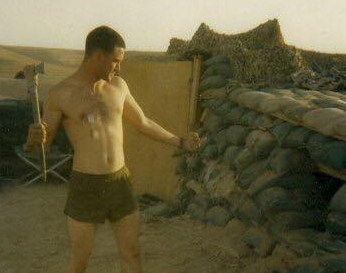
David Pape (right) and buddies by the fire
We were Marines at war and it was rugged, and manly on our Independence Day. It felt symbolic. I don’t know, maybe we were all thinking what guys our age were doing back home, or what we would have been doing. What we were actually doing was way more badass!! –David Pape, Weapons Co, Chat session with author
Here’s what Steve Gray remembers about Retrans (used with permission):
Retrans was playing monopoly till someone mortared you then shooting the hell out of them… There were so many IDF [indirect fire] attacks it was more common to have them then not… The fact that no one was killed there was incredible since it was almost daily contact…
Six-foot-long Chinese rockets, so many mortar attacks I couldn’t count, some small arms, a lot of monopoly, goat herder’s food, mortar attacks. It was always a boring week or 2 on rotation though. Even if everyone got some trigger time.
Steve Gray doing home improvement on a bunker at Retrans
–Steve Gray, Chat session with author
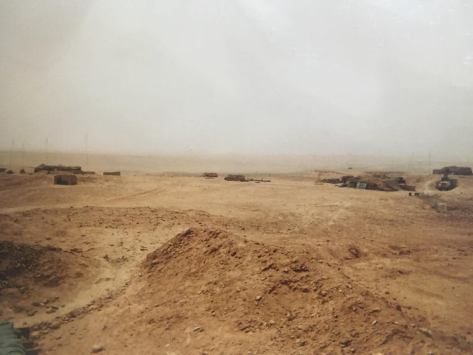
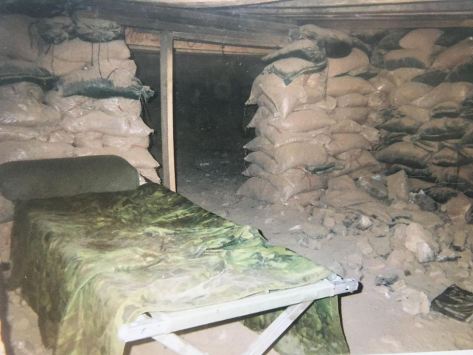
And Ian Katner sent me several photos of the bunkers, and surroundings, showing the, umm… living conditions:
Ian Katner smoking, Jones is behind him in the dark, Riddle to the left, and Sciotti to the far left.
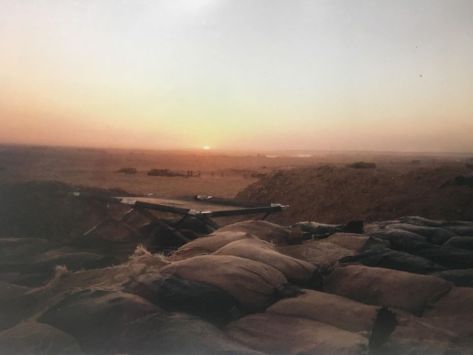
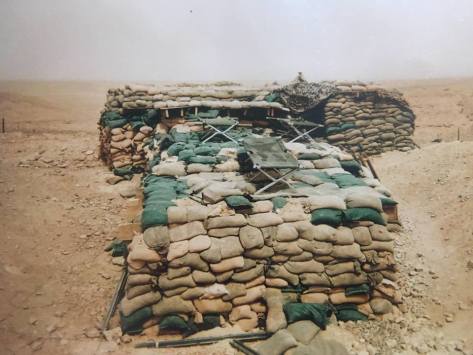
Positions were kind of in a triangle. 50 cal bunker north, MK19 bunker SW, M240 bunker SE. This shows other bunkers from M240 bunker.The mortar section with sunset in background.Top bunker housed machineguns, bottom bunker was sleeping quarters.
Sleeping quarters
View from inside, with the cooking pit
Above the cooking pitCooking multiple MRE’s in one pot.Katner with the 240 and Sciotti in the background with his foam hand.
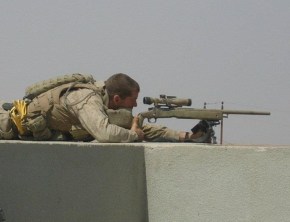
Shane Burggraff, Reaper 2, on a rooftop somewhere near Al-Qaim (used with permission)
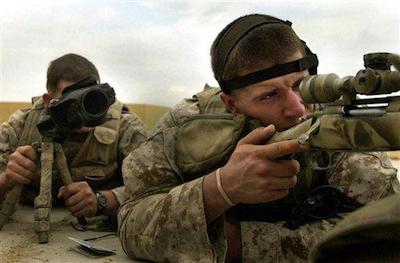
I’ve posted drafts of two chapters covering 3/2’s ScoutSniper Platoon (SSP). The first is a short profile of the SSP, which went by the callsign “Reaper”. The second describes several recon & surveillance operations in May and June of 2005. It ends with a dramatic mission on 11 Jun 05, where two Reaper teams infiltrated into the insurgent-held city of Karabilah. This mission was hugely successful, and helped prepare the battlespace for Operation Spear which came just a week later.
Note: Due to the nature of what ‘Target Softening’ covers, there are several places where names, quotes and photos are currently blanked out, waiting on specific permissions to be given. I felt that would be prudent in this case. Hopefully I will have those permissions soon.
Angel on My Shoulder.Really good article by Ed Marek, about Marines in Fallujah. Has an excellent section on snipers. Not sure where to put this yet, so stashing it here…
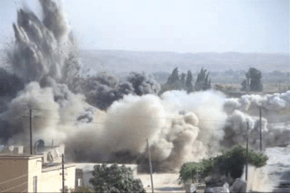
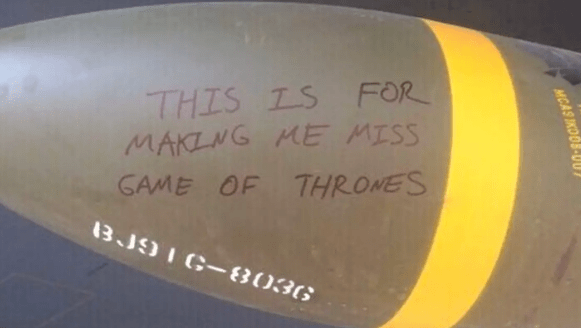
The bombs that were employed (dropped) during the ‘target softening’ operation of 11 Jun 05, were all precision-guided munitions (PGM) of very high accuracy.
I was going to explain a little more about them in the chapter, but on second thought have decided to do that elsewhere. Here is a start…
This is a useful graphic showing several types of U.S. laser-guided bombs (LGBs). The smaller 500-pound GBU-12 is the one most used in Iraq, because a smaller bomb normally poses less risk of collateral damage.
The main limitation of laser-guided munitions is that hazy weather, smoke or dust can diffuse the laser, severely affecting accuracy. However, laser-guided bombs have some flexibility against slower-moving targets, in that the laser spot can be shifted a short distance, even while the bomb is in flight. If targets may be moving, using a laser-guided bomb may be preferable.
The LGBs shown are all built from a Paveway II or III guidance kit and a 500-, 1000-, or 2000-pound bomb body. After weapon release, the tail fins deploy and the bomb is guided to the target by the laser seeker on the bomb’s nose, which homes in on a laser spot projected from the launching aircraft, or another source (such as second aircraft).
This shows the family of GPS-guided Joint Direct Attack Munitions (JDAM), and again the most commonly used is the smaller GBU-38.
Here is a textbox I was going to use in the chapter, but trimmed it out:
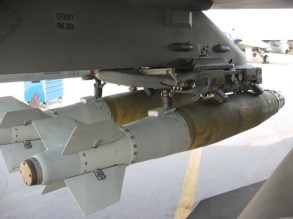
Smart and deadly Two precision-guided munitions (PGMs) loaded up under the wing of an F-16. This type of PGM is the 500-pound GBU-38, also known as a Joint Direct Attack Munition, or JDAM. The revolutionary precision of these weapons comes from the GPS unit in the bomb’s tail, allowing it to hit within five meters (16 ft) of a grid coordinate.
Ran across this today, which eloquently captures an important concept that I was wondering how to convey myself. I think I’ll use this in the book somewhere. Its from a 2015 interview with General James Mattis, before he became Secretary of Defense. He’s being interviewed by Peter Robinson, on the show ‘Uncommon Knowledge”. It’s a wide-ranging discussion, but this part comes in right at the end.
Here’s my (slightly edited) excerpt of the General’s remarks:
I would just say there is one misperception of our veterans and that is they are somehow damaged goods. I don’t buy it. There is also something called post traumatic growth.
For those who close on the enemy, who seek out, close with to kill the enemy, it is a very atavistic, primitive environment and there is post-traumatic stress for anyone who’s been through it. There is stress, no doubt about it. It’s not an insignificant moment the first time you draw down and you shoot your fellow man, that’s all there is to it. Or you see your buddy get hit next to you. So, the bottom line, there’s going to be stress.
But it does not have to be post traumatic “disorder” or “syndrome”. You don’t have to come at it from a position of illness. You can come at it from a position of wellness, from a position of growth as a human being. I’ve seen people come out of this sort of thing better. Better men, better husbands, better fathers, more in touch with their God or whatever their source of spiritual strength is, kinder, more compassionate.
Not everyone reacts the same way, but I don’t buy that somehow if you came home from Iwo Jima or Gettysburg or Iraq or Afghanistan, that somehow you’re limited in what you can do. The Greatest Generation came home from WWII, the worst war in world history and they created good communities, they rose to be college presidents, started industries… I just don’t buy that somehow we are handicapped because we’ve been in those circumstances. I recognize the grim realities. I don’t recognize the limited potential of a human being when they come out of that. –Gen James Mattis, USMC (retired)
Here’s the YouTube, starting with this discussion:
This is an outstanding reference, that is hard to find. I’ve told several people about it, and some have asked me to send it. Now I can just send a link and people can download for themselves.
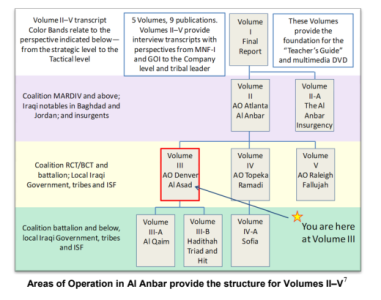
The Institute of Defense Analysis (IDA) published a detailed, multi-year, multi-volume study on the campaign for Anbar and the Awakening. It is an outstanding resource. The graphic shows all the different volumes of this quite impressive project, several of which you can access on IDA’s website.
The volume on Al-Qaim, however, is not available online (at least I couldn’t find it), so I had to request it direct from IDA and they emailed it to me. To make it easier for others, here it is: Awakening Vol IIIA-AlQaim
It covers the Al-Qaim area, over multiple years and units, including 3/2 in 2005. There are multiple interesting interviews with key players. But from my perspective, the most important are long interviews with LtCol Mundy, 3/2’s Commander (page A-3), and Capt Diorio, Commander of India Co (page A-39). The full transcripts are in Vol III-A.
There appears to be a DVD, with all volumes and videos, that you can order. This is a short preview of the project, that IDA posted on YouTube.
(This post was incorporated into the book’s Preface)
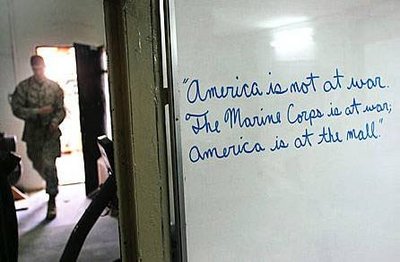
A couple weeks ago, I wrote about a photo and a saying that came out of the bitter fighting in Ramadi in 2006 & 2007, “America is not at war… America is at the mall“. I also put up a link on Facebook, and was surprised when quite a few people responded to that. Apparently, it struck a nerve or two, so this is a follow-on post, a “part 2”. Both will form parts of the book’s Preface, which I’ve been composing piece-by-piece in the last week or so. You can see that work-in-progress here. Anyway, here’s the part 2:
For all intents and purposes, the accomplishments of the 3/2 Battalion during their 2005 deployment — and the entire Iraq War for that matter — have already been forgotten. They’ve been covered by windblown dunes, successive layers of blithe forgetfulness that settled over a nation eager to move on. Which is a tragedy all its own.
The tandem successes of the tribal Awakening and the Bush/Petraeus surge, which were built on foundations laid by 3/2 Marines as described in this book, led to what can only be termed victory in Iraq.
Paradoxically, however, success only accelerated America’s collective amnesia. By 2009, Marines in the city of Husaybah were drinking chai with locals along Market Street, without body armor, an amazing thing to those who had shoot-outs there in 2005. Meanwhile, news at home was dominated that year by Michael Jackson’s funeral, the latest iPhone release and Obamacare. Still more cognizance was soon buried as the new administration executed a precipitous, ill-advised withdrawal from Iraq, completed by 2011. Afghanistan was Obama’s “good war”. Iraq was Bush’s bad war, the stepchild rejected by both left and right.
Then, in 2014, came a layer of hot volcanic ash blasting out of the desert and across the entire landscape as the black shroud of ISIS descended. For veterans who had served in Iraq, especially those who’d been part of the campaigns to pacify Anbar, it was painful to watch enemies they’d once vanquished reconquer large swathes of the country. Each city that fell to the raving killers brought memories of sacrifices made, of friends lost, of blood spilt, all now seemingly in vain. My own reaction was to psychologically turn away. To put it behind me. I didn’t know how to face what I felt was a massive betrayal that was unfolding as ditches filled with corpses and roads were lined with severed heads. Other veterans I’ve spoken with had similar feelings. It was hard to fathom how America could let the progress we’d made, and yes, the victories we’d won, slip away.
And so multiple strata of forgetfulness settled over Anbar, over Al-Qaim (one of the first areas in Iraq to fall under ISIS rule), and over the battlegrounds where US Marines fought just a few years before. In a way, then, my task has been that of a “temporal archeologist”, carefully brushing back layers of sediment to reveal the truth below. Reaching back now, nearly a decade and a half later, is to uncover what is essentially ancient history in today’s Twitter-fueled hyperworld.
We held a meeting and agreed to fight those who call themselves mujahadeen. We believe that there is a conspiracy against our Iraqi people. Those terrorists claimed that they are fighters working on liberating Iraq, but they turned out to be killers. Now all the people are fed up and have turned against them — Sheikh Abdul Sattar Abu Risha in a Sep 06 New York Times interview.
24 Infantry Battalions in the Marine Corps Heritage Foundation; Assessment of U.S. Military Power, 2018
The Marine Corps’ basic combat unit is the infantry battalion. A battalion has about 900 Marines and includes three rifle companies, a weapons company, and a headquarters and service company. FY 2017 appropriations supported 24 infantry battalions, an increase from 2016 levels but still down from 27 in FY 2012. Although the President’s FY 2018 budget request retains support for 24 battalions, under full sequestration, USMC end strength would be able to support only 21 infantry battalions, which, according to General Dunford, would leave the Corps “with fewer active duty battalions and squadrons than would be required for a single major contingency.”
(This post was incorporated into the book’s Preface)
As he navigated through the cramped hallways of the battle-scarred Government Center in Ramadi, Iraq, award-winning photographer John Moore tried to stay out of the way as gruff U.S. Marines hustled from one room to another. For many months, the Government Center had been ground zero in the fight to win back control of the most important city in Anbar Province. Moore lifted his camera as his practiced eye glimpsed a handwritten note on a whiteboard. There, in a careful, cursive script (rare in military settings) some anonymous bard-in-cammo had written:
America is not at war. The Marine Corps is at war; America is at the mall.
The photo was taken in January 2007. It was published in U.S. newspapers, then circulated around the blogosphere for a few weeks, but faded quickly from America’s collective consciousness — ironically proving the nameless author’s point. No doubt it was quickly erased from the whiteboard as well, as such cutting cynicism is not the message the Marine Corps wants to project to the public.
But for those who had fought bloody battles to secure Ramadi in late 2006, known then as the Sunni insurgency’s “heart of darkness”, the cynic’s lines perfectly captured their mood. It was a hard-edged sentiment, with equal parts disgust and pride. Pride at what they’d endured and accomplished. Disgust and disillusionment that it was so casually disregarded, even actively devalued, by most of their countrymen at home.
Today, that same bitter mixture still circulates in the veins, synapses and buried memories of those who served in the wars in Iraq and Afghanistan. Take the time to really talk to an Iraq War veteran about his or her experiences there, and you will likely hear some version of “America is at the mall”.
(I’ve moved the rest of the Preface to its own page)
Posted as a reference, supporting one of the chapters in the book
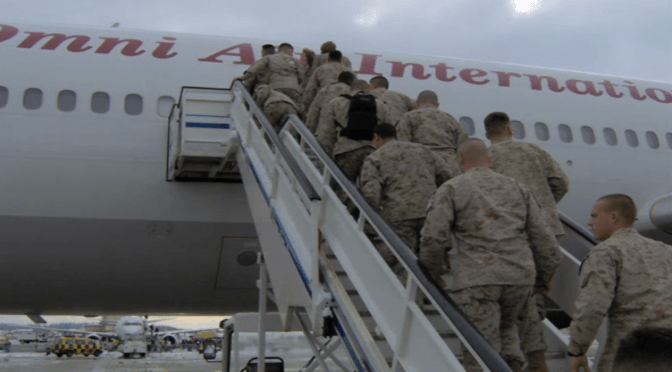
Quote from a footnote in, Marine Forces Reserve Operational History: Global War on Terror (2004 – 2007) by Col David T. Waters, USMCR The turnover of Coalition staffs was significant. II Marine Expeditionary Force Forward (II MEF (Fwd)), 2nd Marine Division, and three regimental combat team staffs relieved their I MEF counterparts, many of whom had been in Iraq for more than a year. Subordinate units, including battalions and squadrons, also turned over as part of the scheduled seven-month deployment cycle.
AL ASAD AIR BASE, Iraq — Each night for a month, helicopters or sometimes cargo planes have brought them–Marines, jarred and jet-lagged from the two days of travel that took them from the U.S. through Germany and Kuwait.
The trip always ends the same, in Iraq’s western desert, on hard plywood benches under piercing fluorescent lights in a warehouse, facing the square jaw of Cpl. Lynn Caskey of Omaha and the simple greeting he has delivered to thousands of Marines in recent weeks:
“Welcome to Al Asad. Welcome to Iraq.”
And like that, the contest for Anbar, one of Iraq’s most restive provinces, is handed to a new crop of Marines, joining a two-year war now on its third rotation of American troops… full article
3rd Battalion, 2nd Marines and the fight for Al-Qaim, Iraq







 References for the Target Softening chapter: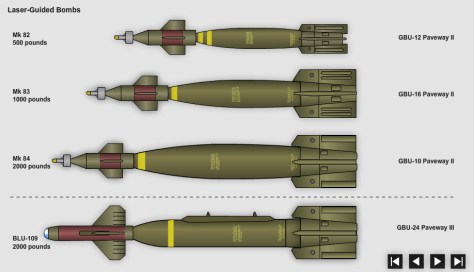

 Smart and deadly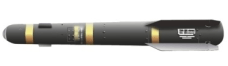
 This is an outstanding reference, that is hard to find. I’ve told several people about it, and some have asked me to send it. Now I can just send a link and people can download for themselves.





 Bastards & Brothers