
Category Archives: Uncategorized

Progress on “Bastards & Brothers”

I know it’s been a long time since I posted, so apologies for that. But there has been significant progress being made in the background. The biggest news is that the book has now passed a ridiculously long security review process (took many months). DoD approval came through the other day with hardly any required changes. In fact, they were completely non-consequential which was a pleasant surprise. A different outfit, one of the “Other Government Agencies”, also approved it with no changes. So those are out of the way.

On another front, I’ve hired a book designer to put the manuscript in the correct format for producing an e-Book on Amazon and a print book through Ingram-Sparks. So they’re working on that if I decide to go the self-published route

But new developments have revived the traditional publishing option. Chris Starling (Col retired, who was RCT-2’s Ops Officer during 2005) has been using his extensive contact list to find high-powered endorsements for the book. The first is H.R. McMaster, retired 3-star, noted author and former National Security Advisor. He’s given the book a great endorsement (for the back jacket). Here’s part of it:

Ajax Trueblood describes in compelling detail tactical level actions and tough decisions that had strategic consequences… This book should be required reading for NCO’s, junior officers and senior leaders. –H.R. McMaster

We’re pursuing other high-level endorsers as well, which will help attract a traditional publisher. Also, through another of Chris’ contacts, I have a channel to reach some publishing companies that specialize in military history. So the search continues with renewed energy on that front. Finding a good publisher would ensure the book gets much wider distribution than self-publishing.

Besides the security reviews, the biggest obstacle has been figuring out how to get the book published and on “shelves” (virtual or physical) so people can order it. I always knew that would be a challenge, but underestimated all the intricacies involved.

I know its been frustrating to many Marines who are waiting to get their hands on this book. It probably seems like it (and I) had faded away. But I’m still pushing forward.

–Ajax
Need help finding 3/2 Marines

As I’ve worked on the book, I’ve had several guys offer to help. But other than asking for details on certain operations or engagements, I didn’t have a good answer. Now I have a concrete area I could use volunteer help with. My list of 3/2 vets from the 2005 deployment is incomplete. I’d like to fill in the blanks on that list, and reach out to them (if possible). This would also be a perfect task for a small team coordinating remotely–one guy from each Company, for example.
As I work on final editing, map preparation and a host of other tasks to get the book ready for publication, this would help a lot. So, if you’d like to help with this, please contact me

–Ajax

Redeployment memories

3/2 debarking from CH-53s at Al-Asad

I’m gathering stories and memories of 3/2’s redeployment in Sep 2005, to plug into one of the final chapters. Not sure what to call it yet, maybe just ‘Redeployment’. It’ll be a short chapter, capturing some of the sights, sounds and feelings that guys remember on the trip back from Iraq. Here are some memories from Jeff Maniscalco, from Kilo Co:

Before we left Al-Qaim we did a left seat right seat with the new unit that replaced us… They were definetly nervous you could tell. [Just] as we probably were 7 months earlier.

[At AQ] I was always feeling like anything could happen… A mortar/rocket attack. Someone trying to hit the main gate or get in the wire… Plus we knew the new guys were manning the posts so you felt like we didn’t know them so you may not have trusted them to do what they needed to do.

[When we left] they left the back hatch of the chopper open so we had a clear view of Camp AQ as we were taking flight. It was probably one of the best feelings I’ve ever felt… It was strange. Glad to be leaving but sad at what we all had experienced. Nobody really talked, I remember that. It was also a short flight. [I was like] ‘Thank God I made it out of that dump. I hope I never have to go back!” I felt like I accomplished something good by not dying.

Al-Asad was different. It was huge and we finally felt like we were “off duty”. It was pretty chill. You [could] walk around without your rifle… We could finally “drop our packs” and relax a little… We sat around mainly just made phone calls home, explored the base. Ate at the chow halls. Food was good there. Got haircuts. –Jeff Maniscalco (used with permission)

Here are other possible ‘scenes’ I’d like to capture. 

-Getting a burger (or pizza or whatever) at Al-Asad
-Crossing out of Iraqi airspace on the flight to Kuwait
-Switching from C-130 to ‘charter air’ flight. Airliner seats. Stewardesses. Etc. 
-Flight across the Atlantic
-Landing in the U.S.  (not sure where you first touched down). 
-Arriving at MCAS Cherry Point
-Bus ride to Lejeune
-Arrival at Lejeune, and forming up, getting dismissed
-Meeting family, parents, wives, kids, etc
-Days after arriving. Adjusting


Status of the book

Good news: I’m just one chapter away from having an entire manuscript. That will be the chapter about redeployment–title to be decided–and I’m asking for input (see below).
Bad news: I still have lots of work to do, including fixing some draft chapters, (also see below) lots of editing throughout, preparing maps, pulling together notes and references, etc, etc. And I need to find a publisher.

More good news: I submitted my first ‘query letter’ to a publisher today. I’ll be reaching out to others soon. I’ve discovered that it’s common practice for a non-fiction author to query multiple publishers. So if anyone knows about an agent or publisher that works with military history writers, please contact me.

More bad news: The publishing industry is notoriously slow, so I don’t know how long it will really take to get a printed book out the other end of this process. I do think its worth going through it, though, so the book can reach more people. It’s a great story, one that deserves a wider audience.

Here’s where I need help, especially from you vets who were there:

Stories about redeployment – I’m looking for your accounts about pulling out of Camp Gannon and Camp Al-Qaim in early Sep 2005, going through Al-Asad and Kuwait, then back to Camp Lejeune. Particularly, I want to hear about your thoughts and feelings on the way back, when you arrived in the States and in the days after returning home.

Chapter Revisions/rewrites – I’m going to be revising several chapters, and recontacting certain sources. Specifically, I’ll be reworking ‘Target Softening’ so will be reaching out to guys from Reaper as I do that.

Permissions – If I contact you asking for permission to use a quote, please reply to me quickly. Early on I committed to all sources quoted in the book that I’d get their express permission before I published their quotes. Please help me meet that commitment by quickly responding when I contact you.

–Ajax


AQI’s Assault on Husaybah: Aug 2005

I’m now writing about August of 2005, the very end of 3/2’s deployment, when foreign fighters and Iraqi members of Al-Qaida in Iraq (AQI) surged into Al-Qaim to seize control of Husaybah. There are several reports that Zarqawi himself was either in the area or was directing the assault. Their main objective was to destroy the Albu Mahal tribe, which had been actively fighting against them. Since mid-summer, the Albu Mahal tribal militia, known as the Hamza Brigade, had been loosely cooperating with India Company and their relationship with the Marines was growing stronger. But Zarqawi’s forces were determined to stop this development and seize decisive control over the key border city.

Describing this timeframe will be an important part of the book, but challenging to do it accurately. It is tough to understand exactly what happened and when. I especially need help to pin down dates of certain events. I have pieced together a timeline, but more details are needed. I could use help from Marines who were there. If you have stories, photos or information from that time that you can share, please contact me.

Here are some things I’d like help with:

-Descriptions of red-on-red fighting in town. What did it look and sound like? Where did you see it occur? How often? Do you know the dates (maybe from a journal or log entry?)

-Eyewitness accounts of when the local muj (Hamza Brigade) came out of the city with white flags, to Trash OP or elsewhere.

-Close calls you had in July or August, such as sniper shots, RPGs, mortars etc. Dates are helpful.

-An incident (possibly 4 Aug?) where the “local muj” militia leader’s house was attacked, and a helicopter mission was diverted to scare the attackers away.

-Details of the 12 Aug 05 firefight at the ING. This was an engagement where India’s 1st Platoon fended off a determined attack by tactically proficient fighters. See more here.

-Mortar support fired from Gannon for the local muj, using either illum or other rounds.

-Any accounts of first-hand interaction with the Hamza Brigade guys, either processing them on Gannon, loading them on vehicles, or other interactions.

WarPig 1 at Golden Gate

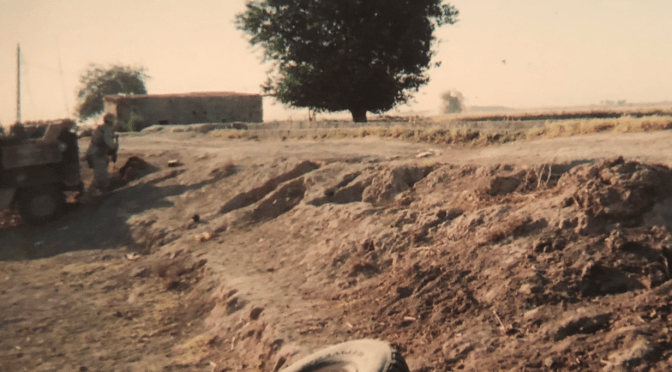
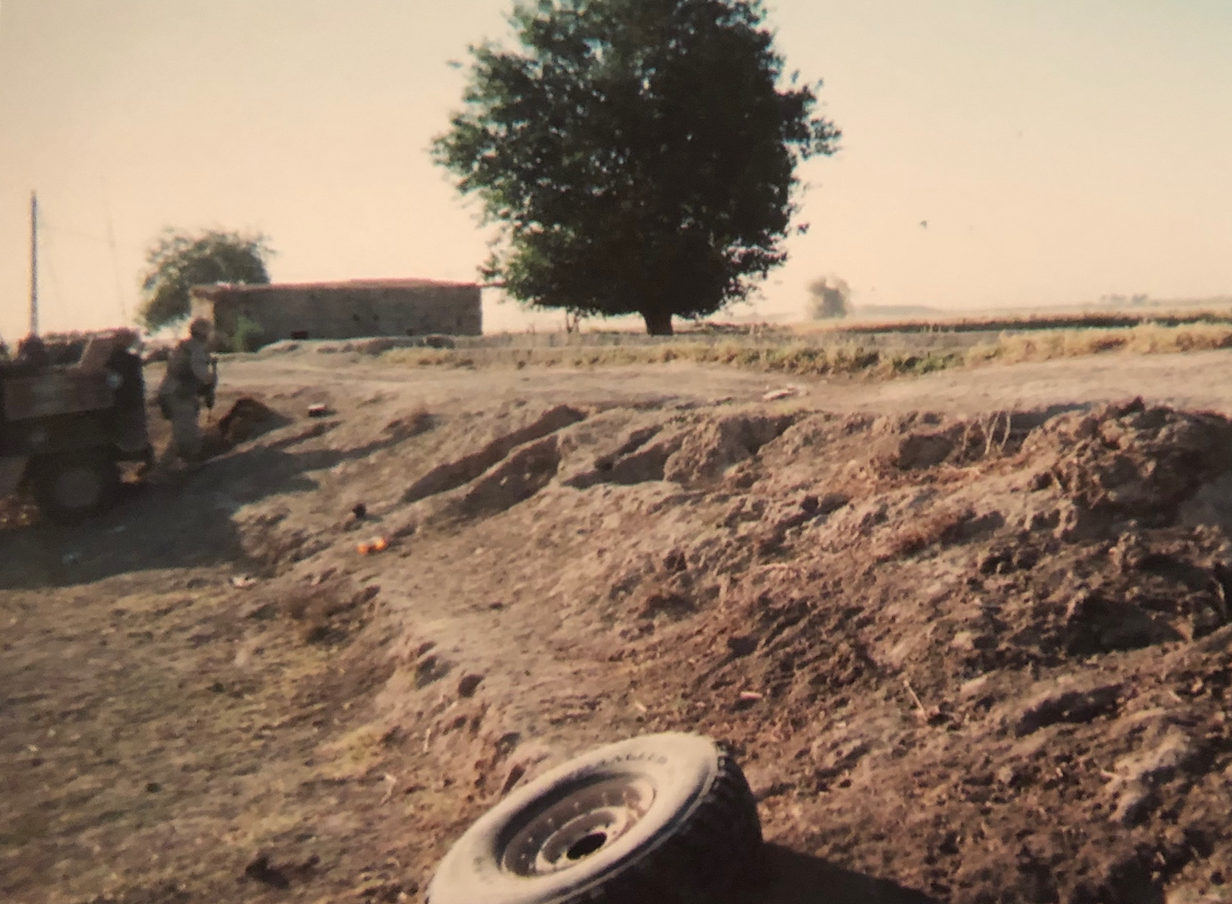
Jon Cornett, a gunner in WarPig 1, just shared some photos with me.  They were taken with a portable film camera, and include shots of Gannon and Operation Matador.  One of them is from Day 1 of Matador, and is pretty cool.  It was taken from WarPig 1’s blocking position near the Golden Gate bridge north of Karabilah, where they held for several days and nights trading shots with the insurgents.

The photo’s cool ’cause it shows an enemy mortar round at the moment of impact. I looks to be 200-300 meters away but you can see dark gray puff of the explosion.  Even though that impact wasn’t too close, it gives you some idea of how exposed the Marines were.  Jon says the guntruck seen on the left carried two Cobra helo pilots who were FACs with the ANGLICO team, calling in air support at the bridge fight.  One appears to be out of the vehicle, maybe trying to spot an enemy position to call air in on.

Just to the right of the tree, you can see the ‘splash’ of the mortar round.  Below it is a more zoomed in view.

WarPig1 mortar
Jon Cornett photo

WarPig1 mortar zoomed
Jon Cornett photo (zoomed in)

Here’s how he describes the scene:

We had pulled up to take our positions in the middle of the field, to relieve the tanks [and WarPig 2].  Once we were set, one of the tanks ran over a mine/IED.  Shortly after the explosion, we started to receive semi-accurate mortar fire.  At that point, a Huey gunship landed to Medevac the wounded tank crew.  Once the Huey took off a mortar landed right next to the one unarmored guntruck.  The shrapnel flattened both driver-side tires and cause other damage. 

At that point we opened fire on the buildings facing the field. We were trying to hit any forward observers the insurgents might have had.  Then we withdrew to a somewhat shielded area by the river.  We continued to get mortar fire and exchange fire for the rest of the day, with it slowing later in the day.  I think we were in that open field for several hours before we withdrew.
–Jon Cornett, WarPig 1

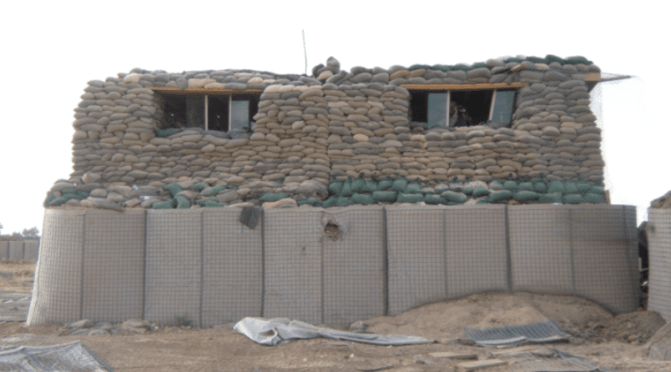
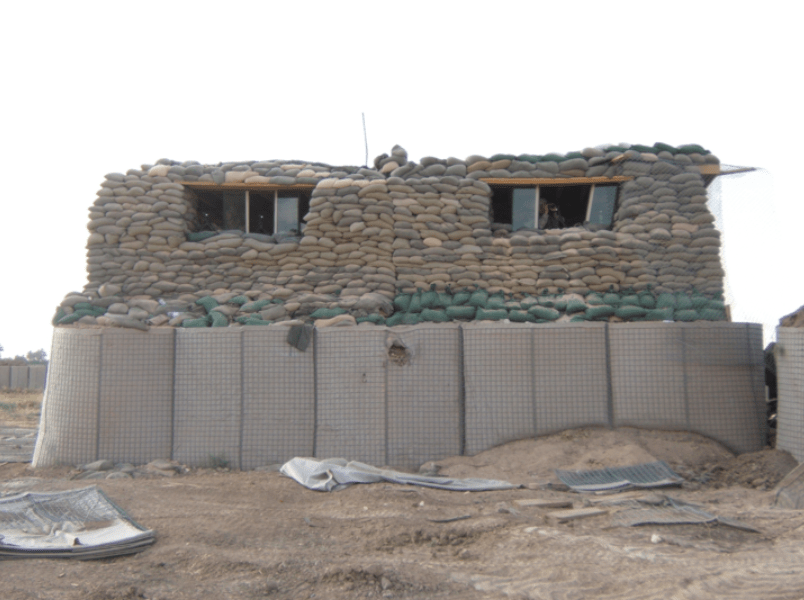
The building of Trash OP


Trash OP copy

At the start of its deployment to Camp Gannon, India Company 3/2 looked for positional advantages, finding ways to use observation and firepower to control key parts of Husaybah.  During April of 2005, the centerpiece of this approach was construction of a new, two-story battle position on the north edge of the city.  Officially called “BP Harman”, the Marines always just called it “Trash OP”. For the full story, read my draft chapter on it.

The chapter features excerpts from interviews with Will Marconi, Brian Hogancamp, Mike Hodd and Frank Diorio.  There are also other links on this site with stories about Trash OP:
Blowing up the bakery
Firefight at Trash OP

And if you have comments or additional information, please contact me via email or on Facebook.

–Ajax


Need Help With Gannon Locations

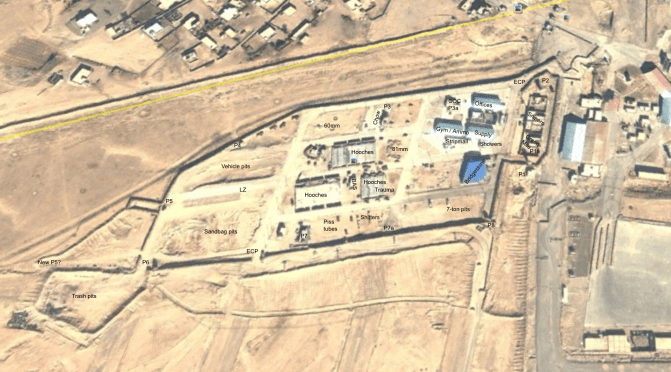
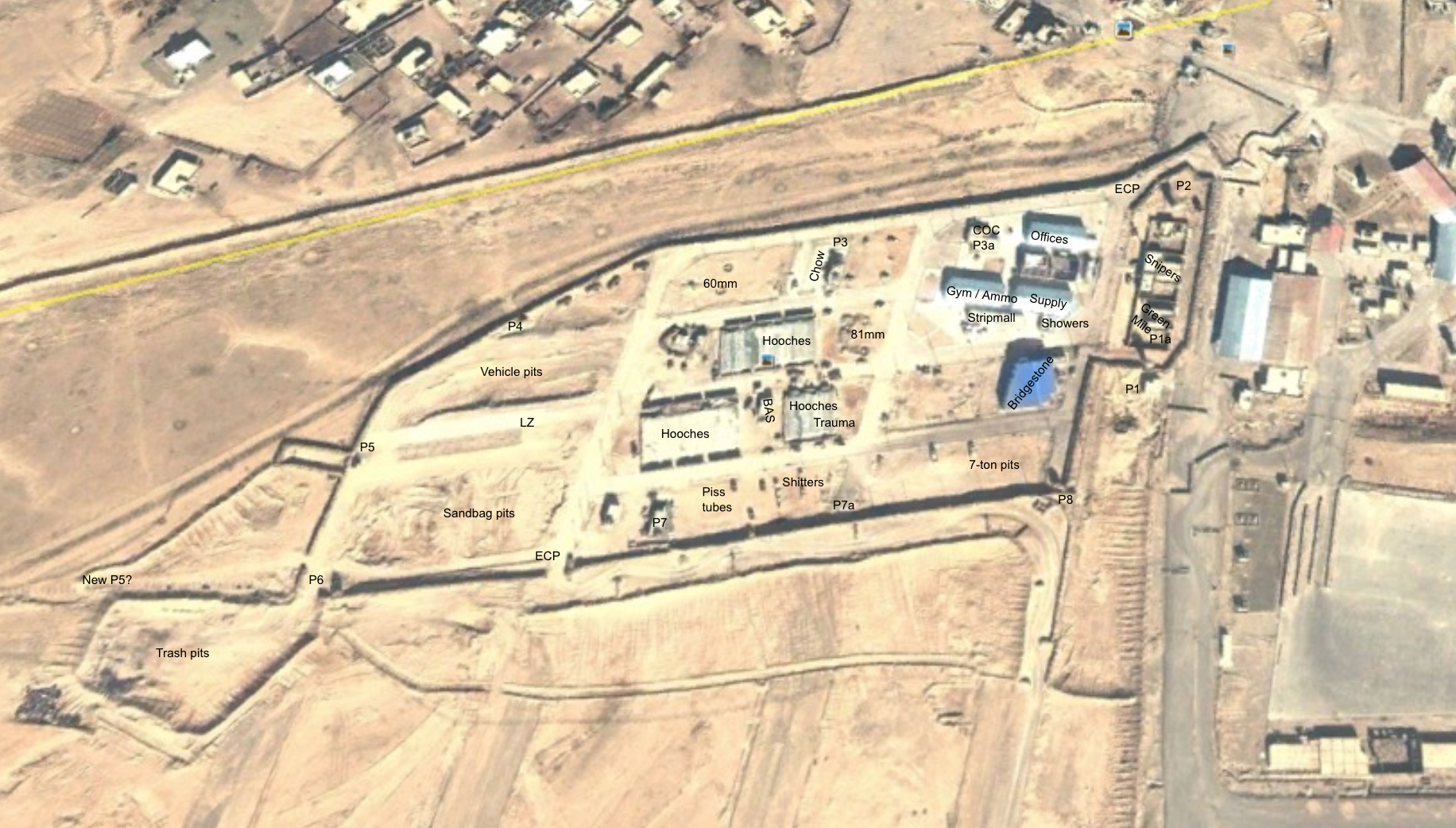
Here’s what I know about the layout and locations on Camp Gannon in 2005.  This is a Google Earth image from Dec 2004, annotated with the guardposts (P1-P8) and a few other locations.  I’m looking for where the chowhall, the latrines, and the burn pit were.  Also, I don’t have a location for P4 (was there one?)  If anyone can pinpoint these or other buildings, it would be a big help.  BTW, Camp Gannon was dismantled long ago, so there are no OPSEC considerations regarding this info.  Contact me here.

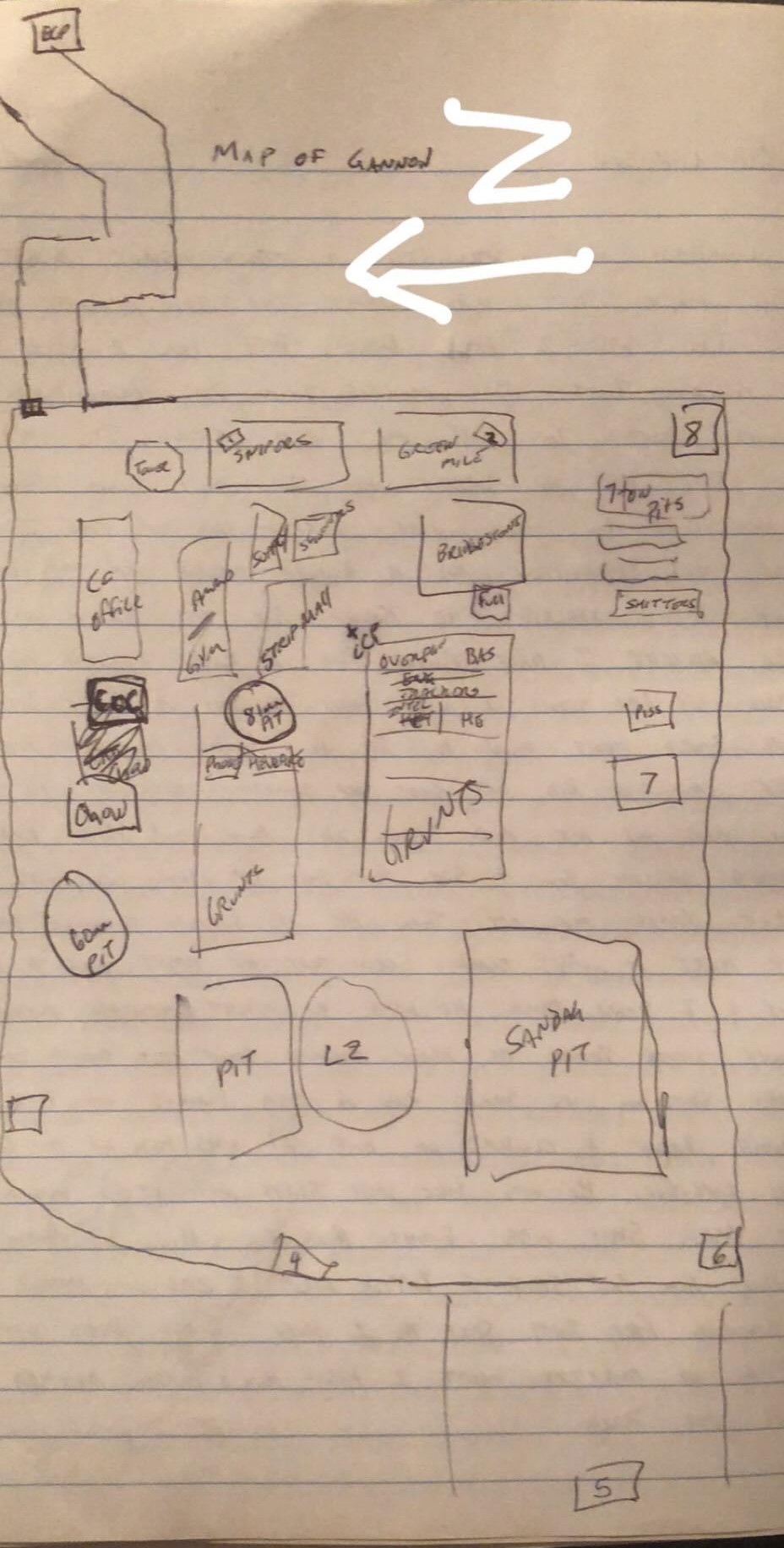
Here’s an updated map, based on a hand-drawn sketch by Chris Nothstine, one of the ‘trackers’ with 4th AAB.  Also had input from Dali Markovic.  I’ve made the annotations smaller, in order to place them more accurately.  You’ll have to zoom in close to read them.
Gannon layout6

Also, here’s Chris’ sketch map (posted with permission):

Notebook map-Chris Nothstine

Here’s my other version, with the larger annotations:


Need stories from Camp Gannon

050503-M-4224F-001

I’m working on chapters about India Company and the fight out at Camp Gannon, and events in and around Husaybah in 2005.  While I’ve spoken to several marines who were there, I could really use more information and first-hand stories about those days (Feb-Sep 2005).  If you were there, I’d like to hear from you.  I know there were guys from WarPig and other elements there also.

I’ve already written chapters covering the complex attack of April 11th, and another about Trash OP.  (You can link to those on the homepage).  But more details and insights are always welcome.

Now I’ll be working on filling out the chronology, describing conditions at Gannon, and covering what happened towards the end of the deployment as the AQI foreign fighters pushed into Husaybah to force out the local tribal forces that had started a loose cooperation with the Marines.

To reach me, use the contact link here, or text me thru my Facebook page.  Also, if you want to share some stories with me, please read through my ‘rules of engagement’.

–Ajax

Combat Memorial

This is an article I wrote from Iraq. Seems appropriate for Veteran’s Day…

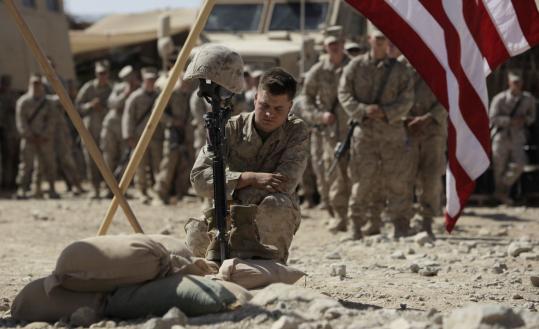
5 Jul 2007, FOB Kalsu, Iraq — As ceremonies go, it is both simple and profound. Soldiers stand in formation, shoulder to shoulder in several ranks. Arrayed before them are a pair of desert boots and a rifle with bayonet fixed, muzzle towards the earth. An empty helmet is perched on the weapon’s butt-stock, flanked by medals in their cases; a Bronze Star and a Purple Heart — posthumously awarded.

This is my first memorial service for a soldier killed in action (KIA). I earnestly hope it’s my last.

A few days ago, a young Sergeant from the unit I’m attached to here in Iraq was hit in a sudden attack. There was an earth-shaking boom, then a thick column of smoke billowing into the sky. As leaders checked in on the radio to account for their troops, I could hear the tension and barely concealed distress when it became clear there were injuries.

Then, in a wavering voice, came confirmation there’d been a KIA.

Word of who the casualty was spread quickly, and a somber mood descended. Over a dozen soldiers in this brigade have lost their lives since I’ve been here, but those losses were from other units and happened elsewhere. This was close to home. The fallen soldier was popular and widely respected. Nearby, I heard the roommate and longtime friend break down in sobs. It was a long day.

Late that night, the Sergeant began the long journey home surrounded by friends and comrades in arms. As is customary, troops from across the FOB came to line the path of the casket as it was reverently carried out to the aircraft. They call the waiting helicopter the “angel flight”, and the procession is a spontaneous, soldier-level gesture of mourning and solidarity.

The memorial service, held a few days later, is more formalized. By then family members have been notified, the press release has been issued, and the fallen soldier’s buddies, unit members and leaders are able to assemble to pay proper respects. The national anthem is played, with all standing at attention and saluting the Stars and Stripes. The chaplain gives a prayer, followed by comments from the unit commander.

One of the soldier’s closest friends comes to the podium, and this proves to be the most difficult part of the ceremony for me. The Sergeant’s character, dedication, courage and strong moral values become obvious from the friend’s heartfelt remarks. Awestruck thoughts flood my mind. Where do we get such amazing young people? How can we be worthy of them? What is the debt we owe because of their sacrifices?

The Chaplain again stands to give a scriptural meditation, with words of remembrance for the dead, comfort for the living and supplication to the Divine. The benediction is given, the honor guard fires the traditional three volleys and the sad, sweet bugle notes of “taps” fill the evening air.

Finally the unit members file by the boots-and-rifle memorial, where each stops to give a slow, deliberate salute. Then they kneel, or step forward, to gently touch a boot or put a hand on the helmet. Many also place a small token or memento by the boots. With chagrin, I realize I have nothing appropriate to offer.

Tristamoretti

But then it’s my turn. I march slowly up to the upended rifle, lean forward to touch the helmet with care while saying a silent prayer. God speed to you, Sergeant. I stand smartly at attention, raise my arm and rigid hand in a slow arc to touch the bill of my hat. And God bless you and your family, Sergeant Trista Leah Moretti.

–Ajax

See more Letters from the Sandbox